Nairobi
01/07/2026
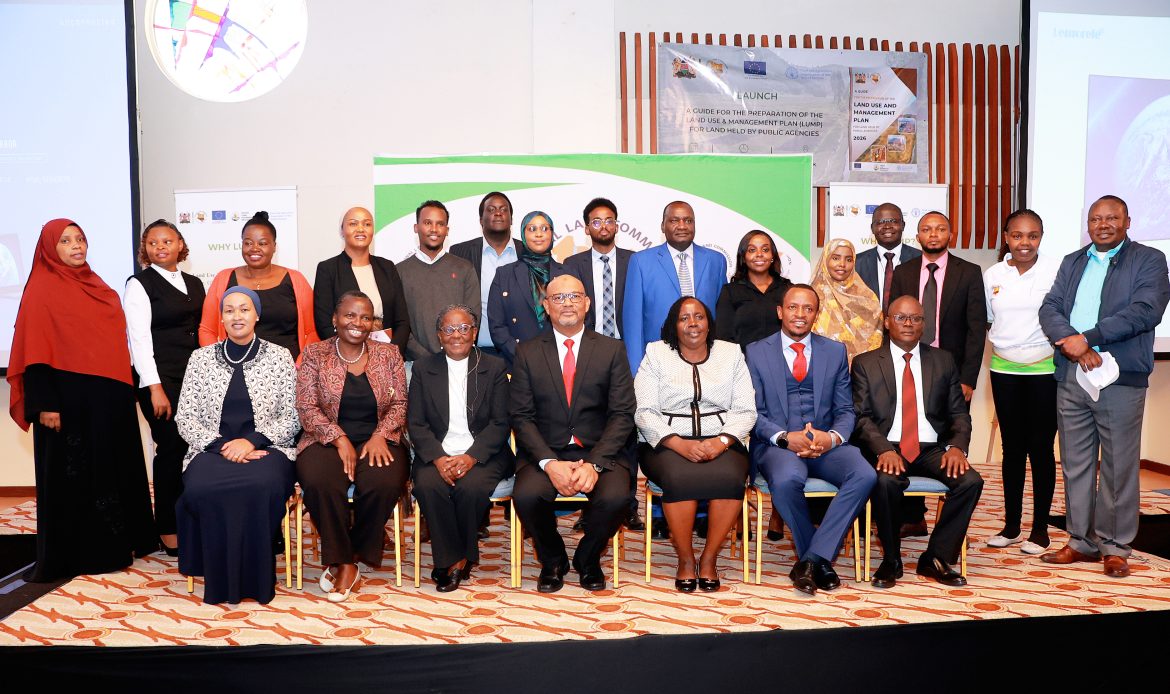
The National Land Commission, in partnership with the Food and Agriculture Organisation (FAO) through the EU/FAO Digital Land Governance Programme, has officially launched the Guidelines for Land Use and Management Plans (LUMPs) for land held by public agencies.
This marks a significant milestone in strengthening sustainable land governance and improving the effective management of public land in Kenya.
The launch took place at the Mövenpick Hotel and brought together leaders from government, constitutional commissions, development partners, professional bodies, academia, and other key stakeholders, all reaffirming their shared commitment to coordinated land-use planning, accountability, and sustainable national development.
The Guidelines are intended to provide a structured and standardised framework to guide public agencies in preparing and implementing Land Use and Management Plans for land under their care, management, and control, in line with Section 17 of the Land Act, 2012.
The guidelines outline a full planning process, including plan preparation, approval procedures, implementation, monitoring, and oversight, while also serving as a key reference for ensuring compliance and improving coordination across public institutions.
The National Land Commission will use the Guidelines to review and approve LUMPs submitted by public agencies, as well as to monitor and oversee their implementation. In addition, the framework will be used to sensitize public agencies on their obligations and strengthen adherence to best practices in land governance. The overall objective of the Guidelines is to enable public agencies to prepare land use and management plans that promote optimal, efficient, and sustainable use of land under their jurisdiction, in alignment with approved County Spatial Plans and broader national development priorities.
The launch underscores the Commission’s continued commitment to strengthening coordinated land use planning, enhancing transparency and accountability, and ensuring that public land is managed responsibly to support sustainable national development.